
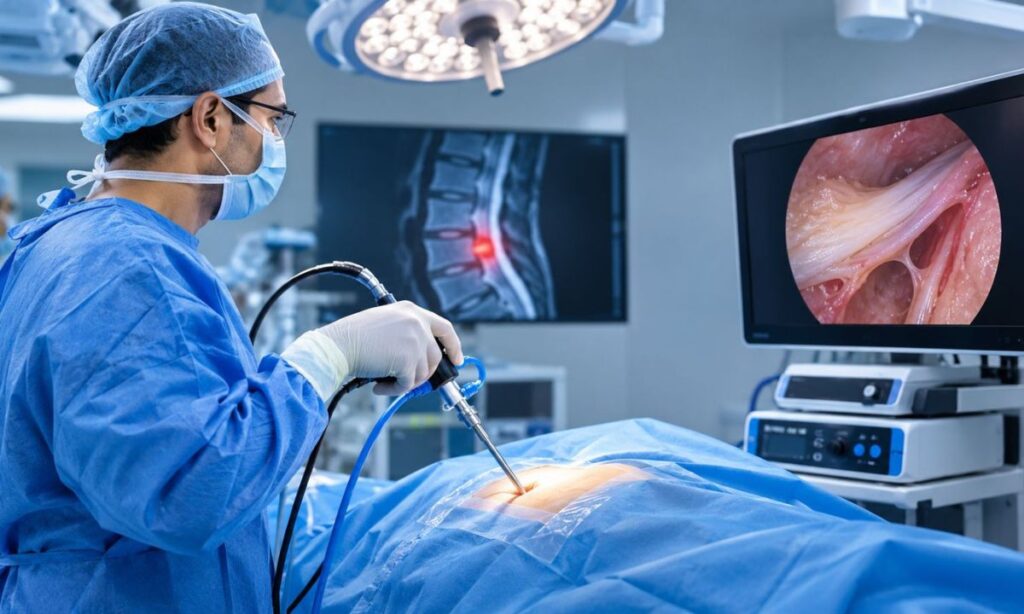
There’s a particular kind of dread that comes with the word “surgery.” For most people, it’s not the procedure itself that worries them most – it’s everything that comes after. The weeks of limited movement, the pain that lingers longer than expected, the slow, frustrating process of feeling normal again. This is exactly where endoscopic surgery has quietly changed the conversation and why so many patients who’ve experienced both traditional and endoscopic approaches describe the difference as almost night and day.
Traditional open surgery generally requires a large incision to give surgeons direct visual and physical access to the area being treated. That access comes at a cost – more cut tissue, more disrupted muscle, more blood vessels affected and, inevitably, more time for the body to repair itself. Endoscopic surgery takes a different approach entirely. Instead of opening up a large area, surgeons work through one or more small incisions, guided by a thin tube fitted with a camera and light – the endoscope – that transmits a magnified, real-time view of the surgical site onto a screen. Specialised instruments are then threaded through these same small openings to carry out the procedure.
The difference this makes to recovery isn’t subtle. Smaller incisions mean less trauma to surrounding tissue, which means the body has considerably less repair work to do. Patients typically experience less post-operative pain, reduced blood loss and a noticeably lower risk of infection, since there’s simply less exposed tissue for complications to take hold in. Hospital stays that once stretched to a week or more after open surgery are often reduced to a day or two – sometimes even same-day discharge, depending on the procedure.
Perhaps the most meaningful change, though, is how quickly people return to their ordinary lives. Someone who might have needed six to eight weeks before resuming normal activity after open surgery may find themselves back to light daily routines within days after an endoscopic procedure, with full recovery often measured in weeks rather than months. For people juggling work, family responsibilities or simply the desire not to lose momentum in their lives, this matters enormously. Recovery time isn’t just a medical statistic – it’s time away from a job, from caring for children or ageing parents, from the small routines that make everyday life feel manageable.
There’s also a psychological benefit that’s easy to overlook. Smaller scars, faster mobility and a shorter hospital stay tend to ease the emotional weight that often accompanies surgery. Patients frequently describe feeling more in control of their recovery, less like a passive patient and more like someone actively getting their life back.
Of course, endoscopic surgery isn’t the right fit for every condition or every patient – some situations still require the broader access that open surgery provides and a good surgeon will always weigh safety and effectiveness above convenience. But for the many procedures where it is suitable – from spinal surgeries to gallbladder removals to joint repairs – endoscopic techniques have redefined what recovery can look like.
At its core, this shift reflects something simple but powerful: less disruption to the body means more time back with the people and routines that matter. And for most patients, that trade-off makes all the difference.