
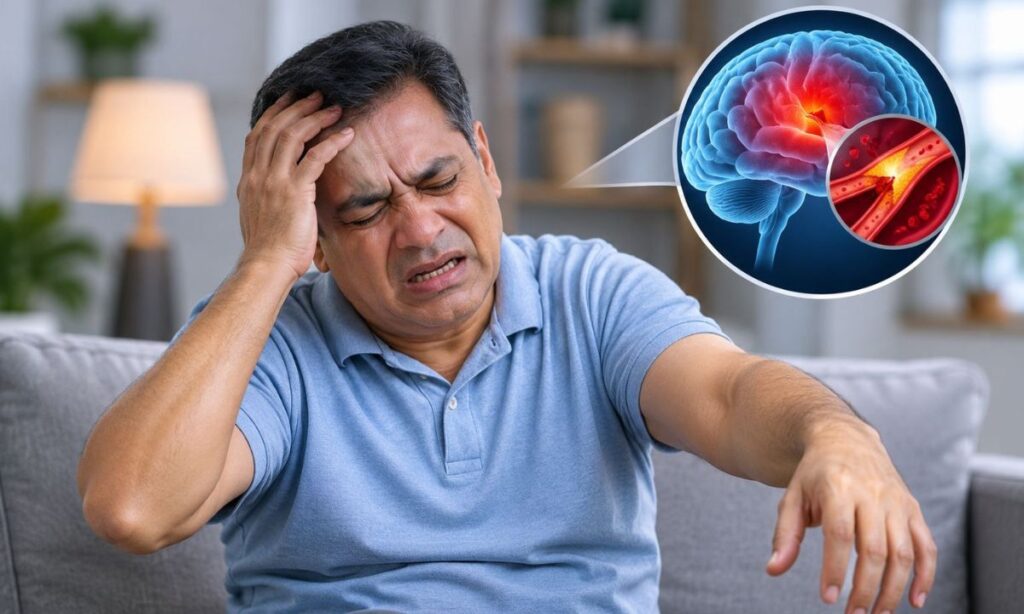
Most people think of a stroke as something dramatic — someone collapsing suddenly, gasping, unconscious. In reality, it often looks quieter than that. A slight droop on one side of the face. A hand that won’t quite grip a cup. A sentence that comes out slurred or doesn’t make sense. These small, easy-to-miss signs are exactly what make strokes so dangerous — not because they’re rare, but because they’re so easy to explain away.
A stroke happens when blood flow to part of the brain is suddenly cut off, either by a clot (the most common type) or a burst blood vessel. Brain cells, unlike most other cells in the body, cannot survive long without oxygen. Doctors often say “time is brain” — for every minute a stroke goes untreated, the brain loses millions of neurons. That single sentence explains almost everything about why recognising the signs early and acting on them immediately, matters more than almost anything else in that moment.
The good news is that stroke symptoms follow a fairly recognisable pattern and there’s a simple way to remember them: FAST.
F — Face drooping. Ask the person to smile. Does one side droop or feel numb?
A — Arm weakness. Ask them to raise both arms. Does one drift downward?
S — Speech difficulty. Is their speech slurred, strange or hard to understand? Can they repeat a simple sentence?
T — Time to call emergency services. If you notice any of these signs, even if they seem to fade, call for help immediately.
Other warning signs are worth knowing too — sudden confusion, trouble seeing in one or both eyes, sudden severe headache with no clear cause or a sudden loss of balance and coordination. These symptoms can appear alone or together and they can vanish within minutes, which is exactly when people talk themselves out of seeking help. That fading is sometimes a warning sign of its own — a transient ischemic attack or “mini-stroke,” which can be an early signal that a bigger stroke is on its way.
What makes strokes especially tricky is that they usually don’t hurt. There’s rarely pain to force someone into action, so people wait. They sit down, they rest, they tell themselves it will pass. Unfortunately, waiting is the single biggest reason stroke treatment arrives too late. Clot-dissolving medication, one of the most effective treatments available, generally only works within a narrow window after symptoms begin — often just a few hours. Beyond that window, options narrow sharply and the damage already done tends to be permanent.
This is why awareness genuinely saves lives, in a very literal, unsentimental way. It isn’t about becoming anxious over every headache or tingling arm. It’s about knowing the specific signs well enough that, in the moment they appear, you don’t hesitate — you act.
If you ever notice these symptoms in yourself or someone near you, don’t wait to see if it improves. Don’t drive them yourself if you can call an ambulance instead, since paramedics can begin treatment before even reaching the hospital. Note the exact time symptoms started — doctors will ask.
A stroke is an emergency the same way a heart attack is. The signs are learnable, the pattern is simple and the response is straightforward. What stands between a full recovery and permanent damage is very often just minutes — and whether someone nearby knew what to look for.
Hi, this is a comment.
To get started with moderating, editing, and deleting comments, please visit the Comments screen in the dashboard.
Commenter avatars come from Gravatar.